You need a manufacturer that delivers durable, lightweight panels with consistent finishes and reliable fire-retardant cores, and you need to know how to compare options quickly. Choose a supplier that meets certifications, offers clear specifications, and can customize panel thickness, finishes, and fire-rating to match your project requirements.
This article Aluminum Composite Panel Manufacturer shows how to evaluate manufacturers on capacity, quality control, and product range so you can shortlist partners with confidence. Expect practical guidance on comparing production scale, customization options, and warranty/support so your next façade, interior, or signage project runs to spec.
Choosing an Aluminum Composite Panel Manufacturer
Decide on specific performance needs, delivery timing, and budget limits before you evaluate suppliers. Prioritize fire rating, finish options, fabrication capabilities, and documented quality controls.
Key Factors to Consider
Ask for product data sheets that state core composition, face alloys (e.g., 3003 or 5005 series), and coil coating type (PVDF vs. PE). Confirm the panel thickness options you need (typically 3, 4, 6 mm) and whether the supplier offers fire-retardant cores compliant with local codes.
Check lead times and minimum order quantities. Verify whether the manufacturer handles cutting, routing, bending, perforation, and custom color matching in-house to reduce subcontracting delays.
Request references and project case studies showing similar scope and climate exposure. Get samples for color, gloss, and adhesion testing. Compare warranty terms that explicitly cover delamination, color fade, and chalking for defined time periods.
Quality Standards and Certifications
Look for ISO 9001 for quality management and ISO 14001 for environmental systems if sustainability matters to you. Ensure the panels meet relevant fire standards: NFPA 285, EN 13501-1, or local equivalents depending on your jurisdiction.
Ask for third-party test reports on fire performance, bond strength, and weathering (accelerated UV and salt spray). Confirm coil-coating certificates that show PVDF resin content and passing of 2000-hour QUV or equivalent tests.
Review material traceability practices: batch numbers, mill certificates for aluminum alloys, and mill-direct sourcing statements. Insist on documented inspection checkpoints during fabrication and a clear nonconformance handling procedure.
Manufacturing Technologies
Prefer manufacturers using continuous lamination lines with controlled pressure and temperature to ensure consistent bond quality. CNC routing, waterjet cutting, and back-routing capabilities matter for tight tolerances and complex shapes.
Evaluate their paint line: automated coil coating with oven profiles for PVDF application gives better film build and adhesion than manual spray. Check for anodizing or fluoropolymer finishing options when you need specific durability.
Ask about automated quality control tools such as inline thickness gauges, adhesion pull testers, and digital color spectrophotometers. Confirm capability for mill-direct buying to reduce variability and for in-house testing labs that issue reproducible reports.
Product Range and Customization Options
You can choose panels by core type, thickness, finish, and color to meet structural, aesthetic, and code requirements. Manufacturers usually offer tailored sizes, edge treatments, and fire-rating options to match specific project specifications.
Panel Types and Finishes
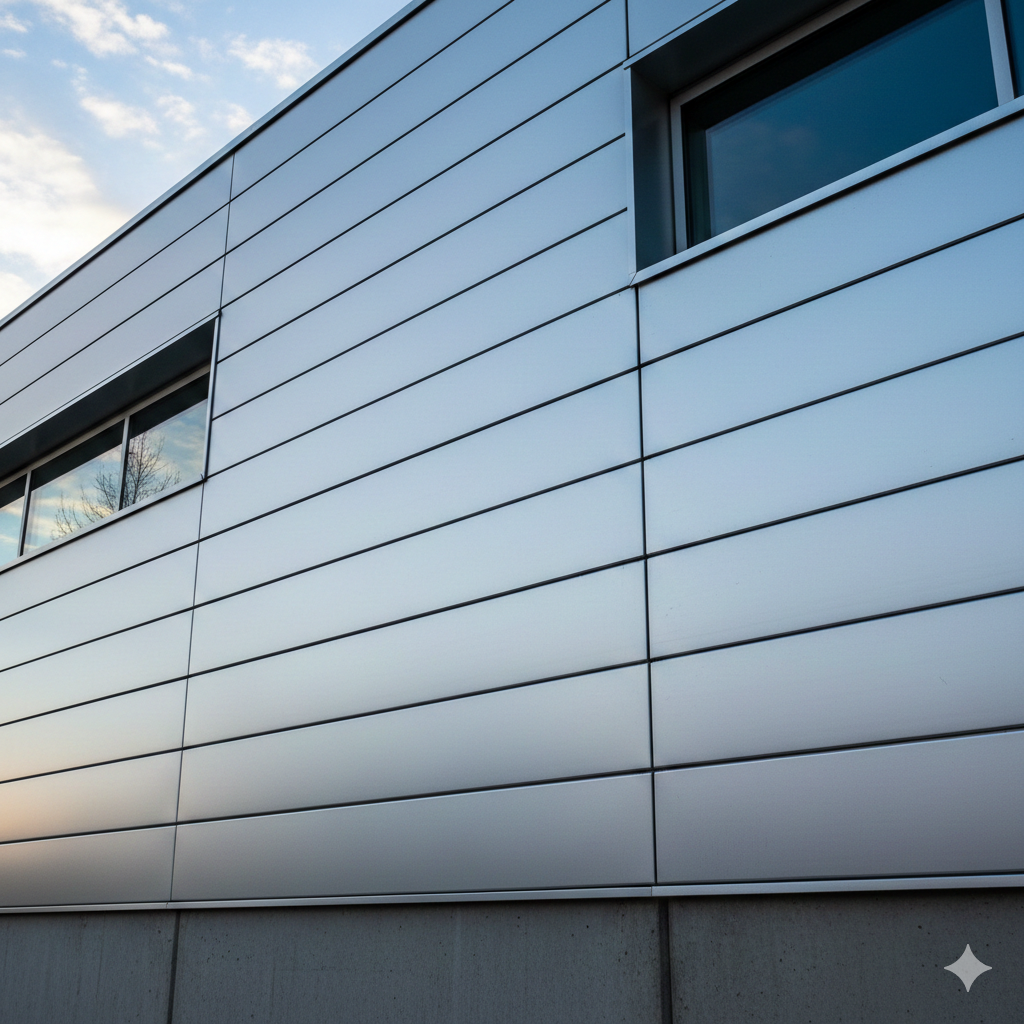
Select from standard sandwich ACM (steel or aluminum skins with a mineral or polyethylene core), fire-retardant cores rated to local codes (FR), and solid metal single-sheet panels for heavy-duty cladding. Thicknesses commonly range from 3 mm to 8 mm, with aluminum skin gauges from 0.30 mm to 0.80 mm; these choices affect rigidity, wind-load performance, and panel span.
Finish choices include PVDF-painted smooth, metallic, brushed, mirror, and textured wood- or stone-look laminates. You can request custom edge treatments (rebate, crimped, or flush) and factory-cut sizes to minimize on-site trimming. Ask your manufacturer for technical datasheets showing thermal expansion, flatness tolerance, and wind-load test results for each type.
Color and Design Selection
Manufacturers supply standard color palettes and can match custom RAL, NCS, or Pantone references for consistent brand appearance across projects. For multi-panel facades, consider ordering panels in matched batches and noting batch numbers to avoid subtle shade shifts.
You can combine solid colors, metallics, and patterned veneers in modular layouts or create printed graphics and perforations for signage and ventilation. Confirm color durability by requesting accelerated weathering (UV) and salt-spray test reports, and specify required gloss levels and anti-fingerprint or anti-graffiti coatings when needed.
Sustainable and Eco-Friendly Offerings
You can choose panels with recycled aluminum skins and mineral or low-VOC cores to reduce embodied carbon. Some manufacturers publish Environmental Product Declarations (EPDs) and offer panels compliant with LEED credits or local green-building standards.
Look for options that use water-based PVDF alternatives, reduced-solvent pre-treatment, and recyclable packaging. Verify end-of-life recyclability—aluminum skins are typically recyclable, but core material disposal varies—by asking suppliers for separation guidelines and documented recycling pathways.