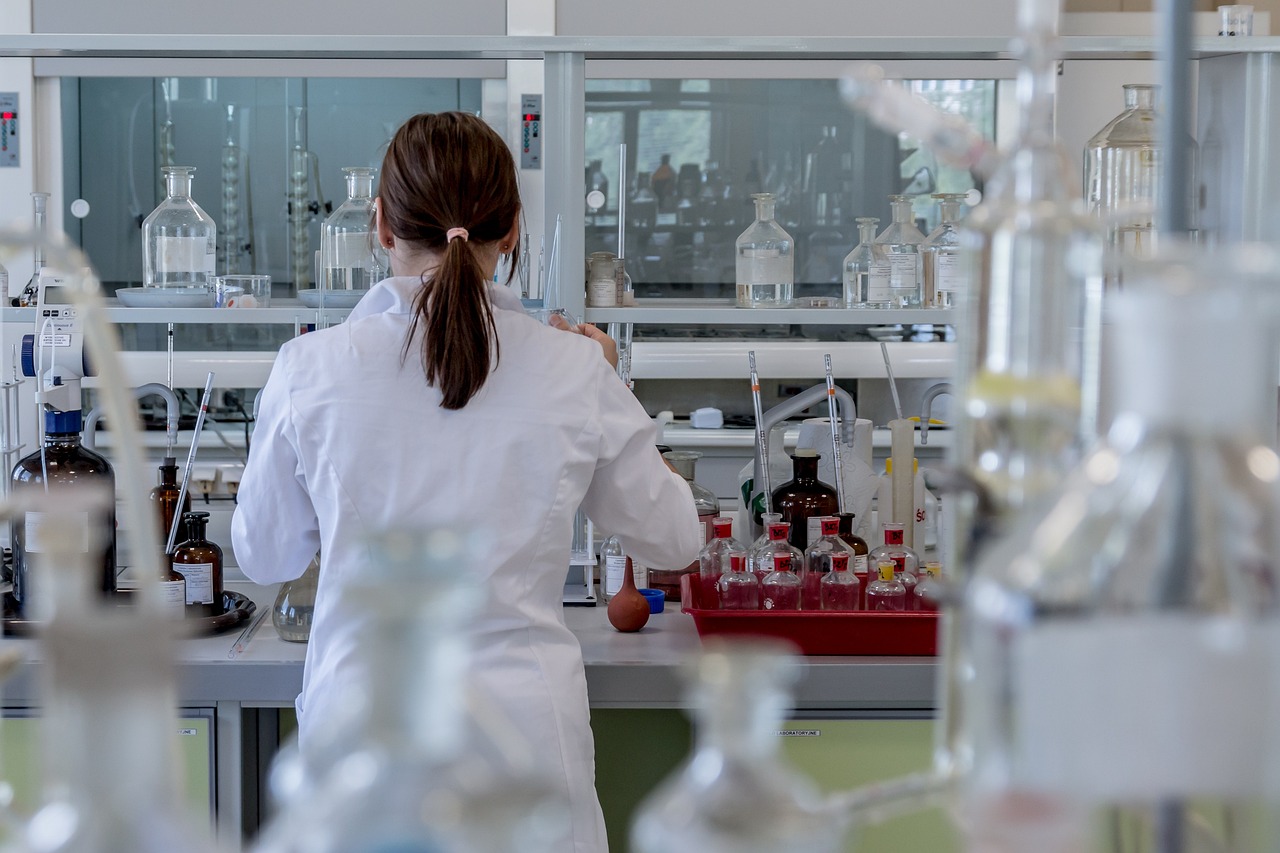
You rely on the right laboratory equipment to get accurate results, speed up workflows, and keep experiments safe. Choose equipment that matches your methods and budget, and you’ll cut errors, save time, and scale work from bench experiments to production.
This article shows which tools and instruments matter most, how they apply across research and industry, and what to consider when buying or upgrading equipment. Expect practical guidance on selection, use cases, and procurement so you can make informed choices for your lab.
Essential Tools and Instruments
You will need precise containers, accurate measurement devices, and reliable temperature control to run safe and reproducible experiments. Focus on material compatibility, calibration, and capacity when choosing each item.
Glassware and Plasticware
Glass and plastic each serve specific roles based on chemical resistance and physical properties. Use borosilicate glass (e.g., Pyrex) for heating, volumetric flasks for precise solution prep, and round-bottom flasks for reactions requiring uniform heating.
Choose plasticware like polypropylene or polyethylene when working with strong acids or when drop resistance matters; avoid plastics that swell with organic solvents.
Keep a stock of:
- Volumetric flasks for ±0.05–0.2% accuracy in solution concentration.
- Graduated cylinders for routine volume measurements.
- Beakers and Erlenmeyer flasks for mixing and transfers.
- Pipettes and burettes for microliter-to-milliliter dispensing.
Inspect glassware for chips or cracks and label plastics for single-use vs. autoclavable. Match material to reagent and sterilization method to prevent contamination or degradation.
Measurement Devices
Accurate measurement underpins reproducible results. Use analytical balances with readability of 0.1 mg for micro-scale work and top-loading balances for routine massing. Calibrate balances with traceable weights and perform routine sensitivity checks.
For liquid volumes, choose between single-channel micropipettes (0.1–10 μL, 2–20 μL, 20–200 μL, 100–1000 μL) and positive-displacement pipettes for viscous liquids. Replace tips and perform leak and accuracy tests regularly.
Include pH meters (calibrated daily with at least two buffers), conductivity meters, and thermometers or thermocouples with known accuracy. Keep calibration logs and spare probes to avoid downtime.
Heating and Cooling Equipment
Control temperature precisely for reactions, incubations, and sample storage. Use hotplates with magnetic stirrers for combined heating and agitation; choose a hotplate with built-in temperature feedback or use an external probe for better control. For high-temperature needs, use oil baths or mantle heaters compatible with your vessel shape.
For cooling, use refrigerated centrifuges and cold rooms or refrigerated incubators when biological materials require 2–8°C. For rapid cooling or freezing, use dry ice/ethanol baths or -20°C and -80°C freezers as dictated by sample stability.
Ensure equipment has temperature alarms and maintain service records. Verify setpoint vs. actual temperature with independent probes before critical runs.
Applications in Research and Industry
You will find specific methods for preparing, measuring, and interpreting samples, plus practical steps to keep instruments working reliably and compliant. The content that follows emphasizes actionable techniques and routine practices you can adopt immediately.
Sample Analysis Methods
Choose analytical techniques based on sample matrix and target analyte. For solids, use homogenization and sieving before extraction; for liquids, filter (0.45 µm or smaller) and consider pH adjustment to stabilize analytes. For trace metals, acid digestion (e.g., HNO3/H2O2) followed by ICP-MS or AAS gives low‑ppb detection limits. For organics, perform SPE or LLE prior to GC-MS or LC-MS/MS to improve sensitivity and reduce matrix effects.
Control for contamination with procedural blanks and certified reference materials (CRMs). Run method validation: limit of detection (LOD), limit of quantitation (LOQ), linearity, recovery, and precision (intra- and inter-day %RSD). Use internal standards for quantitative MS work and isotope-labeled surrogates when available. Record chain-of-custody and metadata (temperature, time, operator) to ensure traceability.
Equipment Maintenance Best Practices
Follow manufacturer schedules and create a written maintenance log you and your team update after each service. Perform daily checks: power-on self-tests, optical alignment for microscopes, rotor inspection for centrifuges, and leak tests for gas lines. Calibrate critical instruments on a defined frequency using traceable standards; document calibration certificates and correction factors.
Implement preventive tasks: clean lenses and detectors with appropriate solvents, replace consumables (filters, seals, bulbs) before end-of-life, and run validation checks after maintenance. Train staff on safe handling and basic troubleshooting; keep an inventory of spare parts for high‑use items. Use a computerized maintenance management system (CMMS) or simple spreadsheet to schedule, track, and audit maintenance activities.