You need reliable heating and cooling in Ottawa to stay comfortable through harsh winters and humid summers. Ottawa offers experienced HVAC companies that handle furnaces, air conditioners, heat pumps, and emergency repairs, so you can get timely service and energy-efficient options tailored to your home.
This article Heating and Cooling Ottawa shows what comprehensive HVAC services look like in Ottawa and how to compare local contractors on experience, certifications, warranties, and customer feedback. You’ll learn practical steps to choose the right contractor and spot sensible quotes so your home stays efficient and safe.
Comprehensive Heating and Cooling Services in Ottawa
You’ll find services that cover installation, repair, maintenance, and efficiency upgrades for homes and businesses across Ottawa. Technicians typically hold ESA/TSSA certifications and offer 24/7 emergency response, seasonal tune-ups, and system replacement options.
Residential HVAC Solutions
You can get full-service furnace, heat pump, air conditioner, and ductless mini-split installations sized to your home using Manual J load calculations. Technicians will assess your insulation, windows, and ductwork before recommending units from recognized manufacturers; expect options for variable-speed compressors and multi-stage furnaces that balance comfort and utility costs.
Maintenance plans often include annual safety checks, heat exchanger inspections, filter replacement reminders, and carbon monoxide testing. For older systems, you can choose staged replacement—swap the heat source first or add zoning to prioritize frequently used spaces. Financing and rebates for high-efficiency models are commonly available through provincial programs and utility incentives.
Commercial Climate Control
You can rely on commercial offerings for rooftop units, VRF/VRV systems, packaged HVAC, and chilled-water setups tailored to building type and occupancy. Providers perform building load analysis, ventilation code compliance (ASHRAE/Local), and controls integration for building management systems (BMS).
Services include preventative maintenance contracts, coil cleaning, economizer calibration, and indoor air quality solutions like commercial ERVs and MERV-rated filtration. For retail or office fit-outs, contractors handle staging, phased installations to minimize downtime, and documentation for warranties and service records.
Emergency Repairs and Maintenance
You’ll get 24/7 emergency response for breakdowns, frozen coils, pilot or ignition failures, and sudden loss of heating during Ottawa winters. Certified technicians arrive with common replacement parts—igniters, capacitors, contactors, and gas valves—to restore service on the first visit when possible.
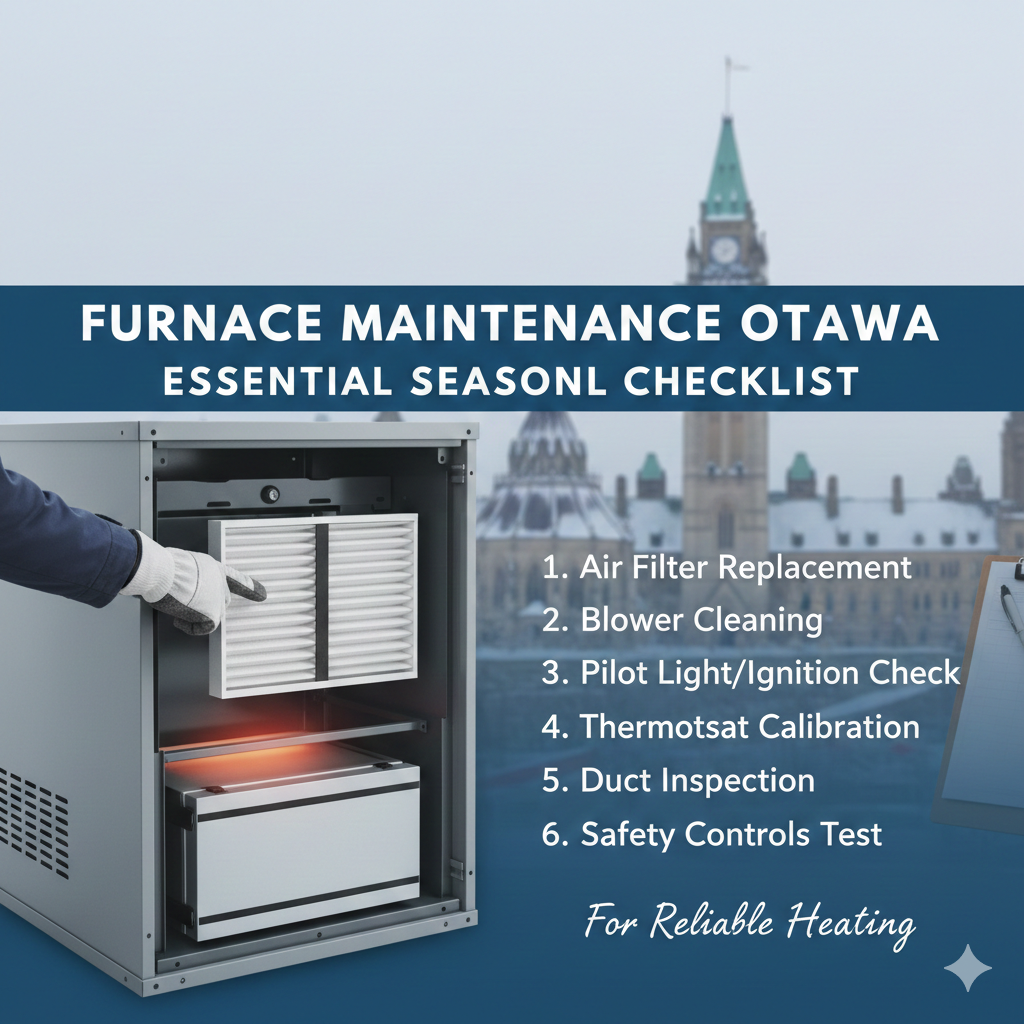
Planned maintenance reduces emergency calls: spring A/C tune-ups and fall furnace inspections catch wear, refrigerant leaks, and electrical issues early. Ask for written checklists and seasonal reminders. Service providers often offer priority scheduling for maintenance plan members and documented safety checks for insurance or warranty compliance.
Energy-Efficient System Upgrades
You can reduce energy use by upgrading to cold-climate heat pumps, high-efficiency condensing furnaces, or right-sized A/C units with variable-speed inverters. Technicians will provide estimated annual energy savings, payback timelines, and available federal/provincial rebates to help with upfront costs.
Upgrade options also include smart thermostats, zoning dampers, improved duct sealing, and attic insulation. These measures target both source efficiency and distribution losses. Request a pre-upgrade audit that includes measured airflow, static pressure, and an efficiency comparison to your existing equipment.
Choosing the Right Ottawa HVAC Contractor
Look for contractors with proven Ottawa experience, clear installation steps, and written warranty and maintenance terms that protect your investment.
Evaluating Local Expertise
Check for Ontario and Ottawa-specific licensing, such as gas technician certification (TSSA/ESA) and municipal business registration. Ask how many years the contractor has worked in Ottawa and for examples of recent local jobs — this shows familiarity with cold-climate sizing and common home constructions in your neighbourhood.
Read recent customer reviews on multiple platforms (Google, Yelp, TrustedPros) and request references for jobs similar to yours. Confirm technicians receive ongoing training on high-efficiency furnaces, heat pumps, and ENERGY STAR products so you aren’t stuck with outdated equipment or installation methods.
Verify the company carries insurance and worker safety certificates. Ask whether they subcontract work and, if so, who will be your point of contact and who guarantees the workmanship.
Understanding Installation Processes
Request a written scope of work that lists specific equipment models, SEER/HSPF or AFUE ratings, and estimated runtime performance for your home. A proper proposal includes load calculation results (Manual J), ductwork assessment (Manual D) or air leakage notes, and the recommended thermostat or zoning controls.
Clarify timelines: start date, expected duration, daily working hours, and cleanup procedures. Confirm how they handle unexpected issues discovered during install — for example, required duct repairs or asbestos-safe procedures — and the approval process for any additional costs.
Ask about quality checks: final airflow balancing, carbon-monoxide testing, and customer walkthrough with system controls. Ensure they provide manufacturer registration and all installation documentation necessary for rebates and warranty activation.
Warranty and Service Agreements
Demand written warranties that separate manufacturer coverage from the contractor’s workmanship warranty. Note durations and what each warranty specifically covers, including parts, labour, and travel fees. Get details on how warranty claims are initiated and typical response times in Ottawa.
Consider a service agreement or maintenance plan that includes annual tune-ups, filter changes, and priority service during peak winter months. Compare what’s included in different plans — diagnostic fees, discounts on parts, and emergency visit policies — and confirm whether planned maintenance is required to keep the manufacturer warranty valid.
Keep all warranty and service documents in one place and record the dates of service visits. That documentation protects your warranty and helps when applying for local energy-efficiency rebates.