You can trace Michigan’s mining story beneath familiar landscapes—from the copper-rich Keweenaw to modern nickel and aggregate operations—and see how those mines still shape local economies and environments. The state remains a significant source of industrial minerals and metals, and understanding where mining happens, what commodities drive it, and how it’s regulated gives you a clear picture of its ongoing impact.
This article Mining in Michigan walks through Michigan’s mining history, the main minerals produced today, and the trade-offs between economic benefits and environmental responsibility so you can grasp both the opportunities and the challenges. Expect concise explanations of who operates mines, what gets extracted, and how modern practices differ from the 19th-century boom that once dominated the Upper Peninsula.
Overview of Mining in Michigan
You will find a long history of copper and iron extraction, concentrated mainly in the Upper Peninsula, along with modern efforts to restart metal mining for battery materials and industrial uses.
History of Mining in Michigan
You encounter evidence of Native American copper use dating back thousands of years on Isle Royale and the Keweenaw Peninsula. Industrial-scale copper mining began in the 1840s on the Keweenaw, driving community growth, shipping, and rail links centered on towns like Houghton and Ontonagon.
Iron mining developed later in the Upper Peninsula and the Marquette Range, with large open-pit and underground operations feeding Great Lakes shipping. Production peaked in the late 19th and early 20th centuries, then declined as deposits were exhausted and economic conditions changed. Historic sites, mine records, and surviving infrastructure still mark this era.
Major Mining Regions
The Keweenaw Peninsula hosts historic and some contemporary copper prospects and remains the focal point for copper exploration. You’ll find most of Michigan’s copper heritage here, with old shafts, stamp mills, and geological outcrops of basalt-hosted native copper.
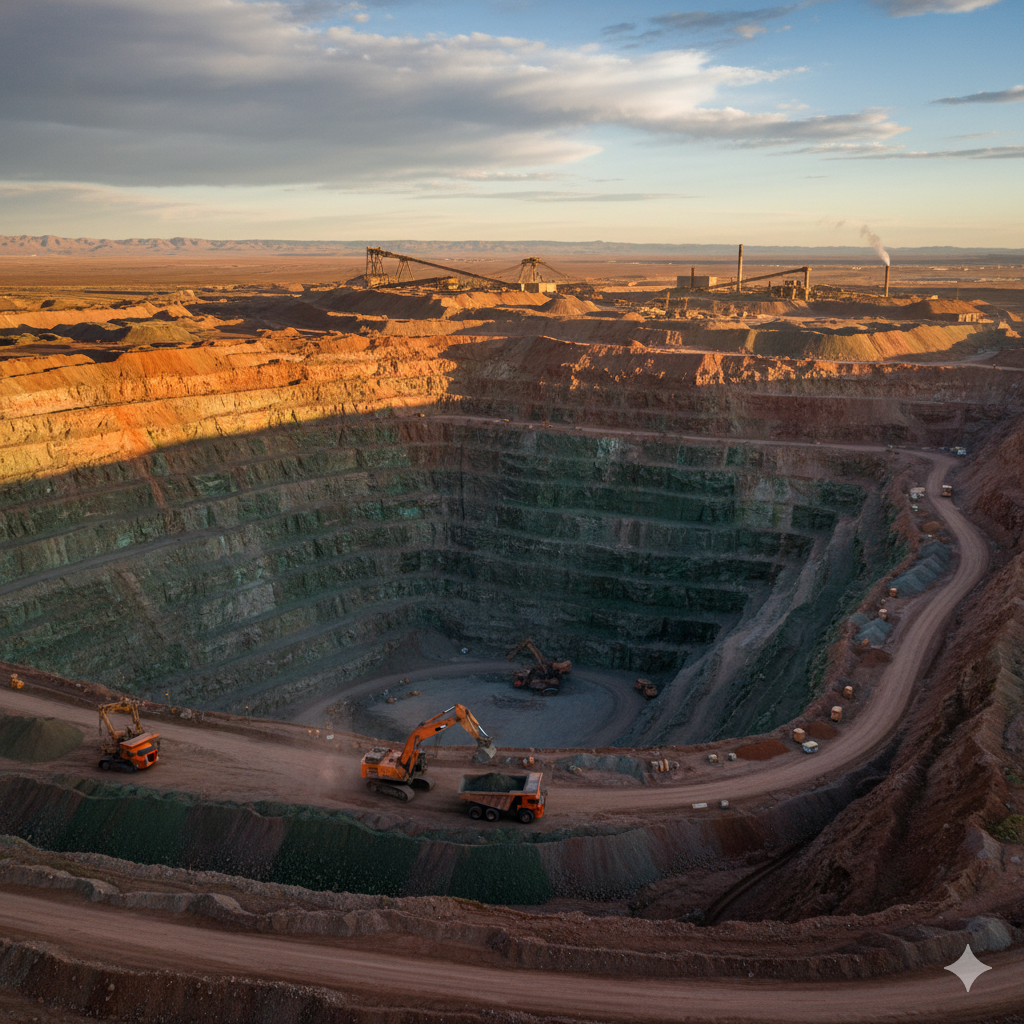
The Marquette and Menominee ranges concentrate iron ore activity, with past operations transforming local landscapes through pits, tailings, and rail corridors. Sand and aggregate deposits appear throughout southern Michigan and coastal dune areas, supporting construction and industrial uses. Emerging exploration for nickel and copper targets spans parts of the Upper Peninsula where bedrock favors sulfide mineralization.
Types of Minerals Extracted
Copper and iron rank as Michigan’s most significant historical commodities. Copper occurs as native metal and in basalt-hosted deposits; iron appears as banded iron formation and taconite that supported large-scale mining and pellet production.
You also encounter small but notable occurrences of silver, nickel, and other metals in sulfide zones. Nonmetallic mining produces sand, gravel, and crushed stone used in construction, while specialty resources such as peat and gypsum appear in limited areas. Contemporary exploration emphasizes battery-relevant metals like nickel and copper for electric vehicles and grid storage.
Key Mining Operations
Historic key operations include the Calumet & Hecla and Quincy mines for copper, and the Empire and Tilden complexes for iron and taconite processing. Many of those sites shaped local economies and transport networks on the Great Lakes.
Current companies and projects vary between active aggregate quarries and exploration-stage metal projects aiming to restart production of copper and nickel in the Upper Peninsula. Regulatory oversight comes from state agencies that manage permitting, reclamation plans, and handling of waste rock and tailings during both operating and proposed projects.
Economic and Environmental Aspects
Mining in Michigan drives regional jobs and tax revenue while creating environmental obligations for water, soil, and wildlife. You will encounter trade-offs between high-paying technical work, local supply-chain activity, and long-term costs for cleanup and monitoring.
Economic Impact on Local Communities
You will find direct employment in mines, processing plants, and exploration crews concentrated in the Upper Peninsula; current figures show thousands of direct jobs statewide tied to mineral production. Wages in mining and related technical services tend to be above regional averages, which supports household income, local retail, and construction activity.
You should also consider indirect impacts: contractors, trucking, equipment suppliers, and service firms expand when a mine operates. Local governments collect property taxes, severance-like payments, and increased sales tax receipts, which fund schools and roads. Conversely, towns can face boom–bust cycles when projects end, so long-term planning and diversified local economies matter.
Regulations and Permitting
You need to navigate federal and state permits before construction or extraction begins. Key permits include water discharge authorizations, wetland and stream impact approvals, air quality permits, and mining-specific land use approvals administered by Michigan departments and federal agencies when waters of the U.S. are affected.
Permitting requires baseline environmental studies—hydrology, fish and wildlife, and water quality—and public comment periods. Companies must submit reclamation bonds or financial assurance to cover post-closure obligations. Expect conditional approvals with monitoring, adaptive mitigation plans, and enforceable limits on effluent and dust to protect drinking water and Lake Superior shorelines.
Reclamation and Land Restoration
You will see legal requirements in Michigan that hold operators responsible for reclaiming disturbed land and restoring habitat after closure. Reclamation plans spell out contouring, topsoil replacement, revegetation, and long-term monitoring to meet state standards for erosion control and water quality.
Financial assurance instruments—bonds or escrow—must cover estimated reclamation costs so taxpayers don’t inherit liabilities. Practical restoration can include wetland creation, reestablishing native plant communities, and converting pits to managed wetlands or recreational spaces. Continuous monitoring for acid rock drainage, metal leaching, and groundwater impacts often persists for decades after mining ceases.